
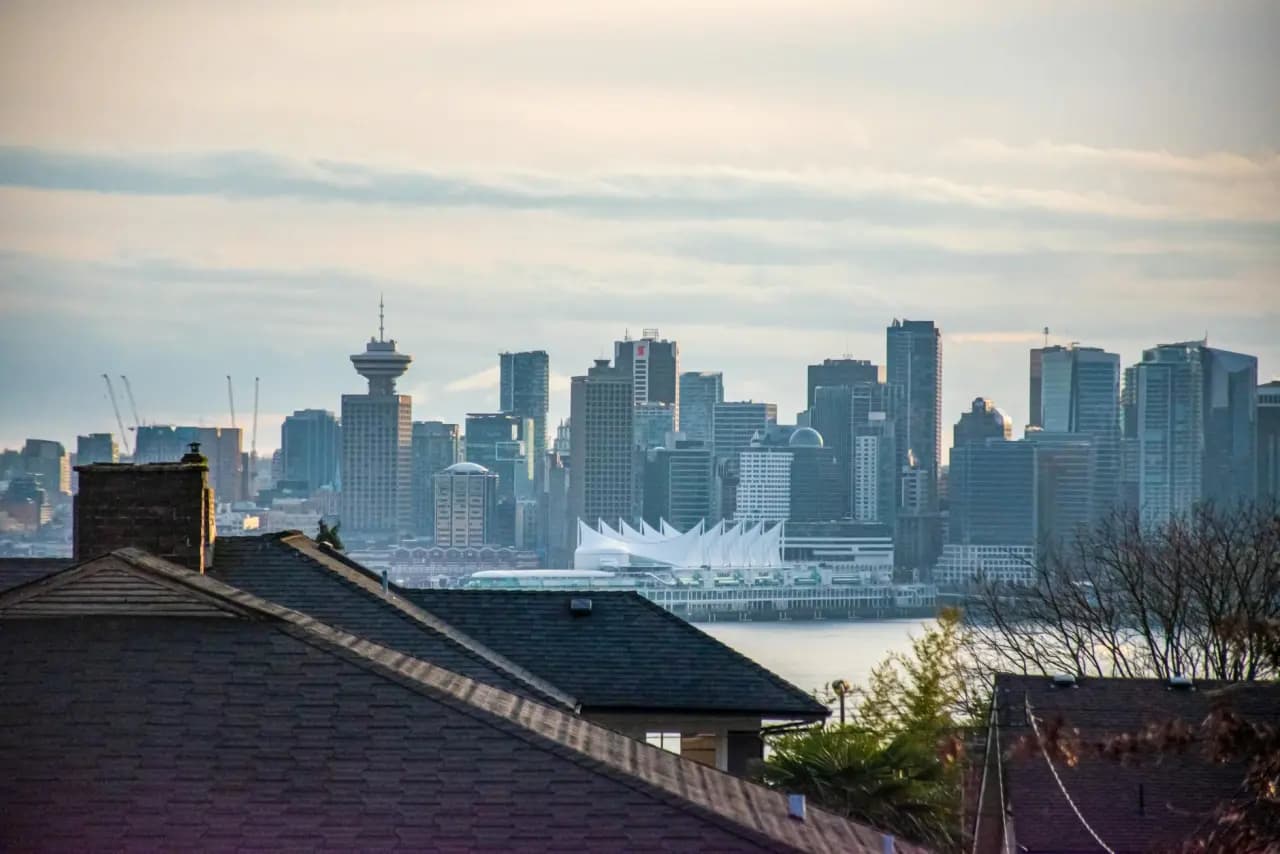
Bus Shelters in Vancouver
Engineered, supplied, and installed in Vancouver, British Columbia — climate-rated, AODA-compliant, with stamped drawings.
Vancouver, BC
Vancouver, British Columbia, is served by TransLink (Coast Mountain Bus Co) (216 routes) and is home to roughly 2400 transit shelters across the city. The local design code requires every shelter to handle a 1. 8 kPa snow load and a 0.
- Transit authority
- TransLink (Coast Mountain Bus Co) · 216 routes
- Shelter network
- ~2,400 shelters
- Snow load (Ss)
- 1.8 kPa
- Wind load (q1/50)
- 0.45 kPa
Engineering Specs for Vancouver
Bus Shelters in Vancouver
On the ground, Pacific coastal exposure adds wind-load uplift and demands corrosion-resistant fasteners. Vancouver procurements typically run through BC Bid, with proposals citing NBCC 2020 loads and BC Building Code 3. 8 conformance, plus footing-depth stamping matched to the 0. 45 m municipal frost line.
Vancouver — Engineering & Permits
The Vancouver deployment leans on TransLink (Coast Mountain Bus Co) route geometry and 216-route coverage to set bay sizing and stop spacing. Local accent: In Vancouver, British Columbia, every shelter is engineered to 38 cm annual snowfall, 4. 1 °C average winter temperature, and 0. 45 m frost-depth footings — with BC Building Code 3.
Installation Workflow
8 accessibility compliance and stamped engineering for Zone 4. BusShelters. ca delivers, installs, and maintains for TransLink (Coast Mountain Bus Co) and private clients. The municipal population sits near 662k, which sizes the install pipeline.
In Vancouver, British Columbia, every shelter is engineered to 38 cm annual snowfall, 4.1 °C average winter temperature, and 0.45 m frost-depth footings — with BC Building Code 3.8 accessibility compliance and stamped engineering for Zone 4. BusShelters.ca delivers, installs, and maintains for TransLink (Coast Mountain Bus Co) and private clients.
Why Vancouver clients choose BusShelters.ca
Shelter models for Vancouver
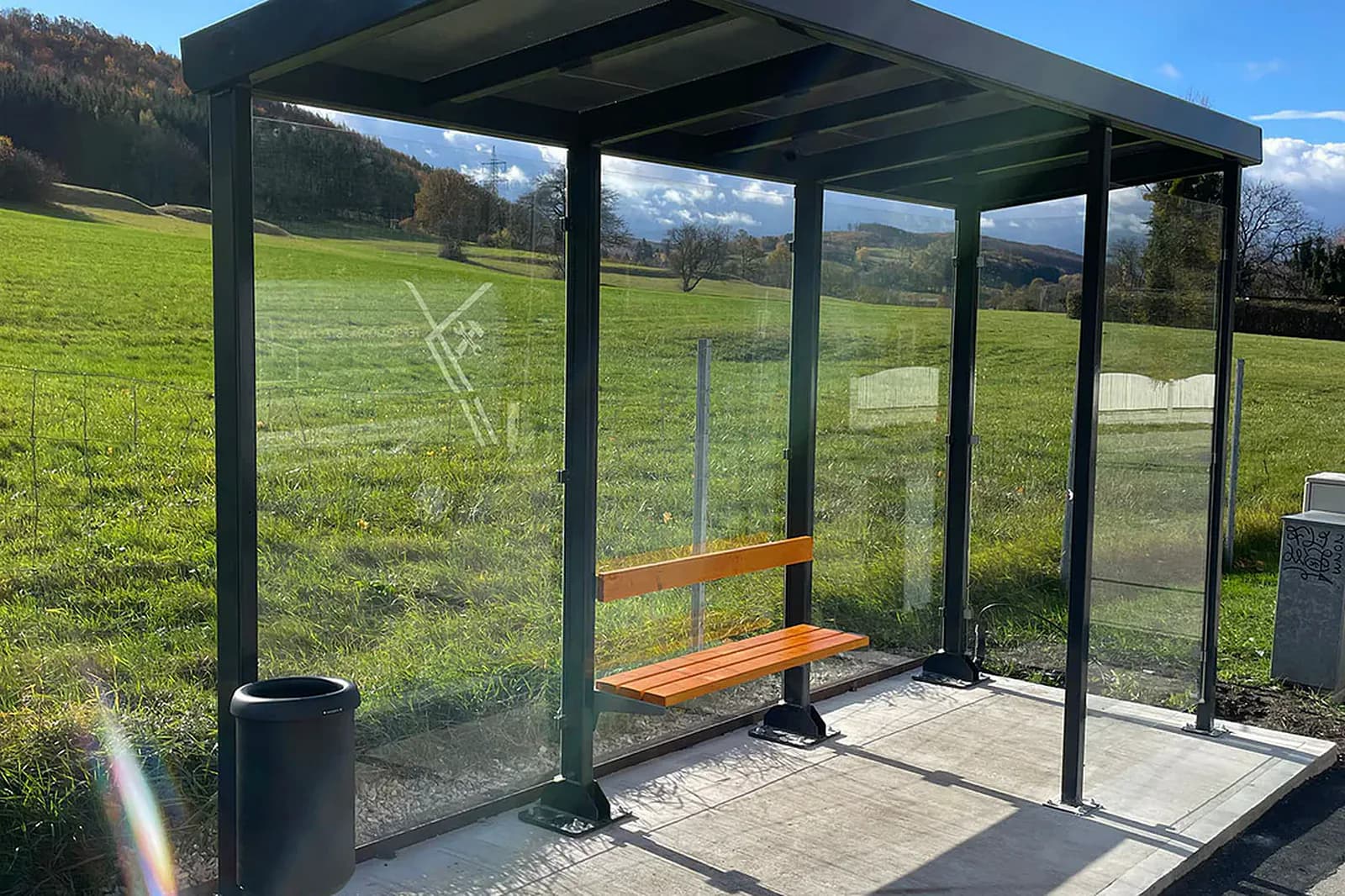
Standard Bus Shelters
Aluminum-frame cantilever and freestanding bus shelters supplied Canada-wide — tempered glass walls, anti-graffiti panels, integrated bench.
Learn more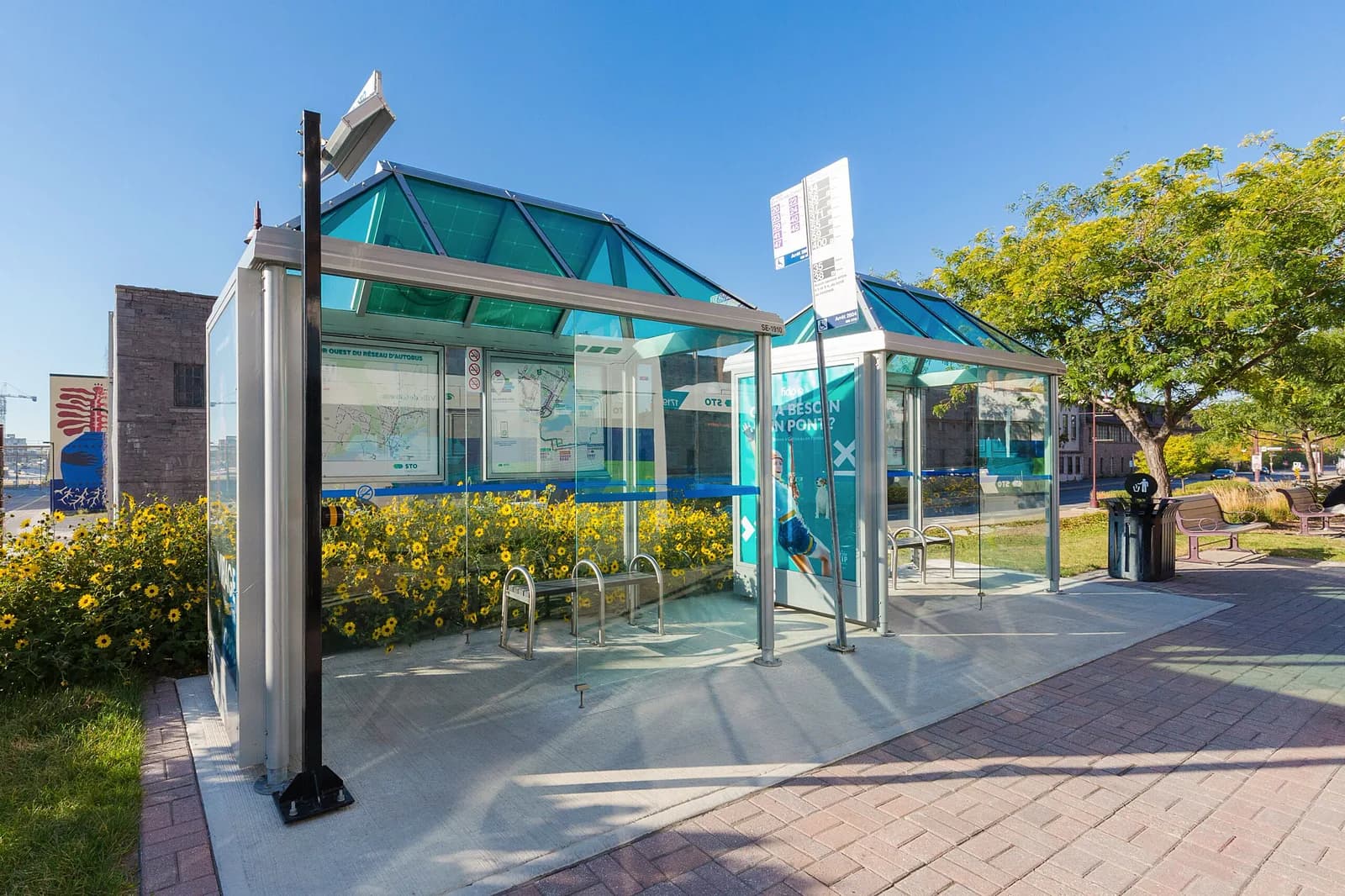
Solar-Powered Bus Shelters
Off-grid LED-lit shelters with rooftop PV array — no trenching, no electrical connection, full winter operation.
Learn more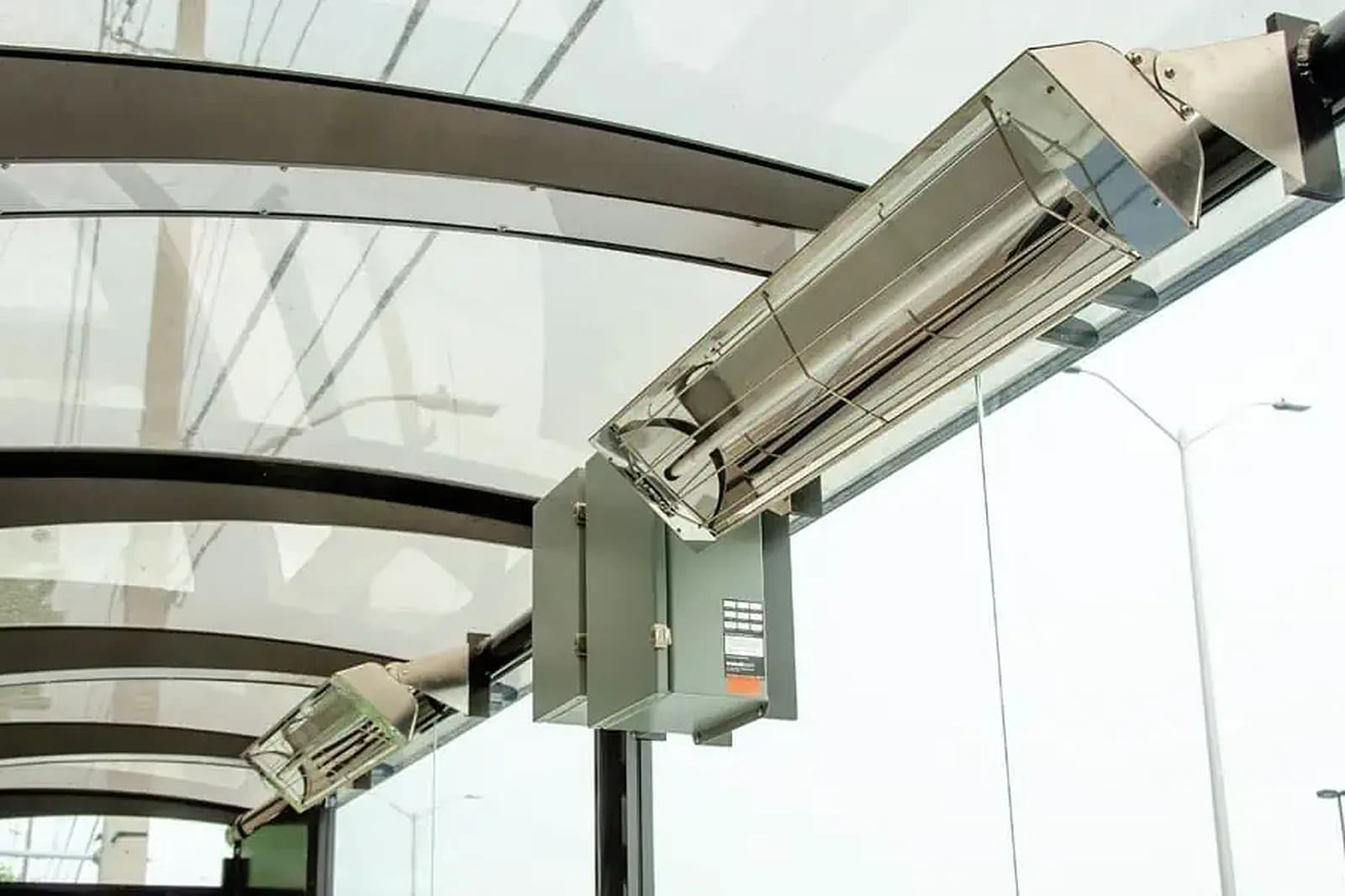
Heated Bus Shelters
Radiant overhead heating panels triggered by motion sensor — thermal comfort below -30°C, heated bench seat option.
Learn more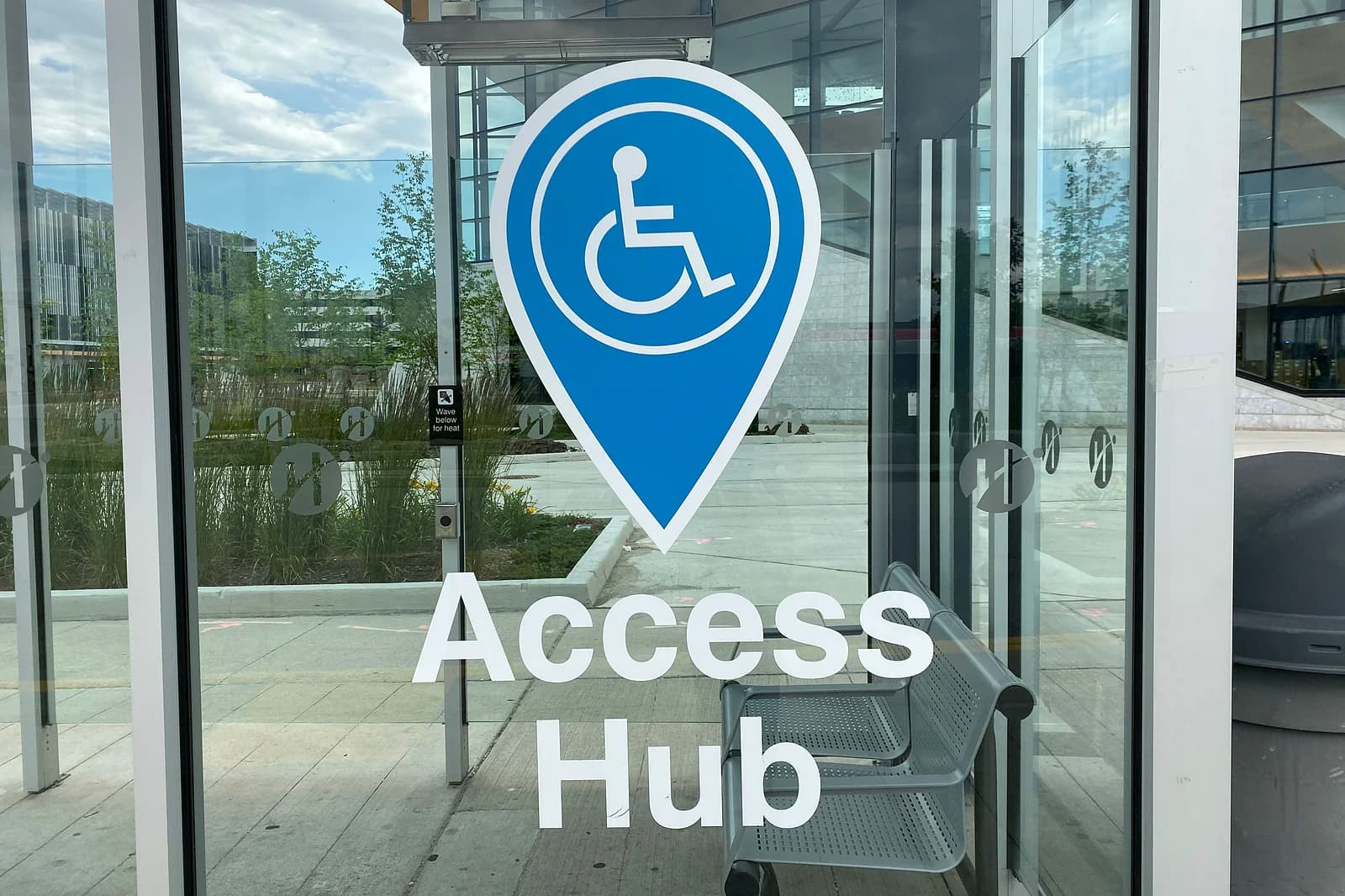
ADA & AODA Accessible Shelters
Wheelchair-clear floor space, transfer bench, tactile wayfinding, contrasting colour bands — meets AODA, BC Building Code Section 3.8, and CSA B651.
Learn moreFrequently Asked Questions — Vancouver
What snow load and wind load should a Canadian bus shelter meet?
Canadian bus shelters must be engineered to the National Building Code of Canada snow and wind loads for the installation city — these vary widely (e.g., 2.2 kPa snow in Toronto vs. 3.9 kPa in Saguenay; 0.44 kPa wind in Toronto vs. 0.84 kPa in St. John's). All BusShelters.ca structures ship with stamped engineering drawings specific to your city and frost depth. Both values come from NRCan Climatic Data tables referenced in NBCC 2020 — there's a published 1/50-year value for every Canadian municipality, which is what the P.Eng. stamp is calculated against. For coastal sites add a terrain-exposure factor (Vancouver Island, Atlantic Canada) and for high-elevation sites a topographic factor (Whistler, Banff). Roof slope, snow-shed direction, and footing depth-to-frost are derived from these inputs. We supply the calculation package alongside the stamped drawings so the AHJ review is single-pass.
How long does a bus shelter installation take?
A standard 4-foot or 6-foot freestanding shelter installs in 4–8 hours on a prepared concrete pad. If we pour footings, total project time is 3–5 days including 48-hour concrete cure. Larger custom or modular configurations take 1–2 weeks. Smart-shelter electrical and data hookups add 1 day. We coordinate around transit-service schedules and typically complete municipal installs in single overnight windows. Permitting is the variable: in mature municipalities (Toronto, Montréal, Vancouver, Ottawa, Calgary) building and right-of-way permits issue in 2–4 weeks; smaller municipalities can stretch to 6–8 weeks when the public-works engineer is the only reviewer. We handle the permit submission ourselves and provide weekly status updates. For projects with tight occupancy-permit deadlines, a temporary-shelter rental (8-week minimum) covers the gap until the permanent install completes — used most often on private-developer site-plan-approval timelines.
How do you handle graffiti and vandalism?
Anti-graffiti coatings on glass and panels allow most tags to be removed with a non-abrasive cleaner. For damaged glass, our 48-hour Canada-wide replacement program dispatches tempered glass from regional depots in Toronto, Montreal, Calgary, and Vancouver. Our maintenance contracts include monthly cleaning, quarterly inspection, and annual hardware torque checks. Treatment depends on incident frequency: sacrificial film (clear polymer sheet swappable in under 4 minutes) is right for high-vandalism corridors where panels are tagged weekly — replacement film costs $30–$60 per panel versus $200–$400 to refurbish a permanently-coated panel. Permanent fluoropolymer coating is right for low-vandalism sites where the once-a-year clean-down justifies the initial uplift. For glass breakage, 8–10 mm polycarbonate instead of tempered glass survives baseball-bat-grade impact and is the default spec on school and campus deployments.
Can I see a bus shelter in person before ordering?
Yes. Our showroom in Brantford, Ontario displays full-size production units of every product line. We also maintain installed reference sites in Toronto, Montreal, Vancouver, Calgary, and Halifax that prospective municipal clients can visit by appointment. Engineering and procurement teams can request stamped drawings and material samples shipped overnight. Our showroom in Brantford, Ontario has full-size examples of every product line — standard, solar, heated, accessible, smart, modular, and several custom-architectural pieces — set up as you'd see them on the street. We host site visits Monday–Friday 8am–5pm Eastern by appointment; group visits for transit-authority procurement teams are common and we'll co-ordinate the agenda with your team's schedule. For teams outside Ontario, we can also direct you to deployed-in-the-field reference sites in your region — most of our recent municipal installs have a public-right-of-way location available for inspection.
Ready to spec a shelter for Vancouver?
Send us your scope, route, or RFP — our bid desk responds within one business day with stamped engineering and a fixed quote.